The safety design of thermal management systems is crucial for the application of lithium batteries. As an indispensable component in series and parallel connection between battery packs, the temperature rise effect of connectors has a significant impact on the entire lithium battery energy storage system. Low temperature rise design has become an inevitable trend in the development of connectors.
In lithium battery energy storage systems, the sensitivity of lithium batteries to temperature mainly comes from their sensitivity to the physical and chemical properties of materials. Temperature directly affects the activity and conductivity of the electrode material, the insertion and removal of lithium ions on the electrode, and the transmission of lithium ions through the membrane, which in turn affects the electrochemical reaction inside the battery. The external performance is the temperature sensitivity of the power battery. Because within a suitable operating temperature range, the charge and discharge voltage and capacity of the battery increase. Within this range, as the temperature increases, the activity of the battery increases, the internal resistance of the battery decreases, and the charge and discharge efficiency of the battery increases accordingly. However, when the temperature exceeds a certain range, the internal side reaction speed of the battery will accelerate, and such side reactions require the consumption of lithium ions, solvents, and electrolyte, leading to the degradation of battery performance. The experimental results show that the cycle life of the battery decreases significantly when it is continuously operated at above 45 ℃, which is more evident under high power charging and discharging conditions. Therefore, if you work in a high-temperature environment for a long time, the service life of the battery will be significantly shortened, its performance will also be greatly reduced, and may even lead to safety accidents. When the temperature is too low, the activity of the active substance in the battery decreases significantly, with an increase in its internal group value and polarization voltage, resulting in a significant decrease in both charge and discharge power and capacity, even leading to irreversible degradation of the battery capacity, and burying potential safety hazards. Especially during the charging process, lithium ions are separated from the positive electrode material, enter the electrolyte, move towards the negative electrode material, and then enter the negative electrode material composed of graphite to form LiC compounds. When the temperature decreases and the charging speed is too fast, lithium ions enter the negative electrode to form a LiC compound. Lithium ions close to the negative electrode trap electrons into metallic lithium, and gather to form lithium dendrites. When the lithium dendrites grow, they may puncture the membrane, causing a short circuit.
In addition, long-term uneven distribution of the temperature field inside the battery box can also lead to uneven performance of various battery components, especially in the high temperature region, where the aging rate of the battery is much faster than in the low temperature region. Over time, the differences in material properties between different battery materials will become greater, resulting in poor consistency between batteries, even premature failure, and shortening the life of the entire power battery system.
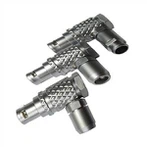
The connector is a necessary component in series and parallel connection between battery packs. When the battery pack is charged and discharged, the passage of a large current will cause a thermal effect on the connector. When the temperature of the connector increases, exceeding the temperature of the battery pack, it will cause the connector to have a low temperature rise and fall characteristic. This connector uses the terminal technology of our company's independent intellectual property rights to maintain the optimal area inside, outside, and inside the terminal, effectively reducing the contact resistance, The connector has a good appearance design, with multiple surfaces designed to be corrugated, which enhances the heat dissipation function; In addition, this metal material is made of imported high-purity red copper, with high conductivity and stable overcurrent temperature rise. The plastic material is made of a unique alloy material, which combines the performance of various plastic materials, meeting fire protection requirements, while having high toughness; In addition, the connection between the internal terminals is made of imported red copper, which has high conductivity, stable overcurrent temperature rise, stable connection between the plastic material and the wire, good high temperature resistance, high temperature resistance, high temperature resistance, fire resistance, and heat resistance. The temperature rise test results of various current level connectors in our company can be controlled below 35 degrees Celsius (ambient temperature is 20 degrees Celsius).
Lithium battery energy storage is an inevitable trend in the development of the times. Ensuring the safe and reliable operation of lithium battery energy storage systems is the primary condition for the operation of energy storage systems. As an important component of lithium battery energy storage, we have always adhered to the design concept of safe, reliable, and environmentally friendly products to provide dedicated electrical connector products for lithium battery energy storage.